The Most Common Injuries in K-pop Dance Practice (and How to Avoid Them)
Quick Answer: The most common K-pop dance injuries are ankle sprains from quick directional changes, knee strain from repeated deep bends and floor work, and lower back strain from repeated hip isolations and full-song run-throughs without adequate warm-up — nearly all of which are meaningfully reduced by a proper dynamic warm-up and pacing full run-throughs rather than jumping straight into them cold.
Most injury-prevention advice for K-pop dance still gets copied from general dance fitness content, missing what’s actually specific to this style’s repeated formations and full-song intensity.
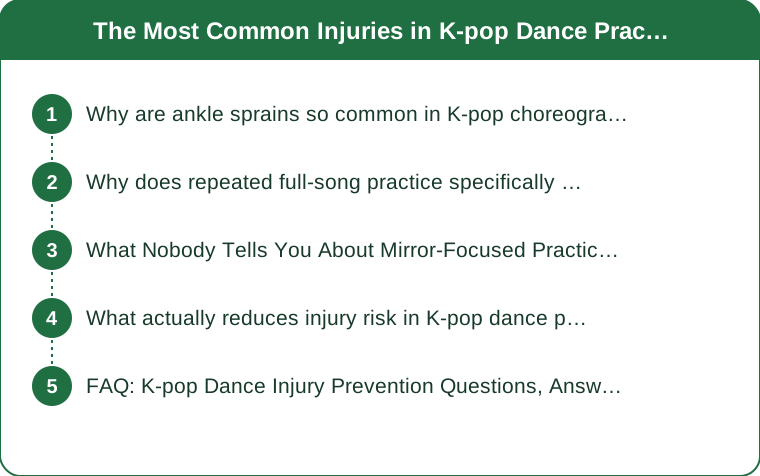
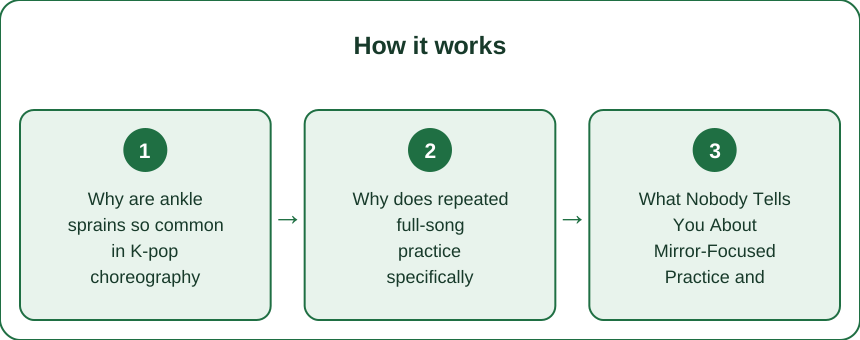
Why are ankle sprains so common in K-pop choreography specifically?
K-pop routines frequently involve rapid directional changes, pivots, and quick footwork patterns performed at high speed and often repeated across many run-throughs in a single practice session, which creates a high volume of exactly the movement pattern most likely to cause an ankle roll.
Practicing on hard studio floors without adequate ankle stability work compounds this risk, especially for dancers newer to the specific footwork demands of the genre.
Why does repeated full-song practice specifically strain the knees and lower back?
Many K-pop routines include deep knee bends, floor choreography, and repeated hip isolations, and running a full song multiple times in a row without breaks accumulates fatigue in exactly the muscles stabilizing those joints — fatigued stabilizers are a well-known injury risk factor across dance styles generally.
This is particularly relevant for K-pop specifically because full run-through practice (rehearsing the entire song repeatedly for performance-readiness) is a very common practice structure, more so than in some other dance disciplines with shorter drilled combinations.
What Nobody Tells You About Mirror-Focused Practice and Injury Risk
Here’s an overlooked factor: dancers intensely focused on matching a mirrored reference video sometimes push through early pain signals or fatigue to keep pace with the video’s timing, prioritizing accuracy over noticing their own body’s warning signs.
Building in deliberate pauses to check in on fatigue or discomfort during long practice sessions — rather than only stopping when something already hurts — catches minor strain before it becomes an actual injury.
What actually reduces injury risk in K-pop dance practice?
- A dynamic warm-up specifically targeting ankles, knees, and hips before any full run-through, not just general stretching
- Limiting consecutive full-song run-throughs and inserting recovery breaks rather than repeating back-to-back for hours
- Ankle stability and proprioception exercises (single-leg balance work, resistance band exercises) built into regular training, not just during rehab from a prior sprain
- Proper footwear suited to the practice floor surface, since inappropriate shoes on hard floors measurably increase impact stress
FAQ: K-pop Dance Injury Prevention Questions, Answered
How long should a warm-up be before K-pop dance practice?
A thorough dynamic warm-up of 10-15 minutes targeting the ankles, knees, hips, and core is a reasonable baseline before intense choreography practice.
Is it normal for knees to ache after K-pop dance practice?
Mild fatigue is common, but persistent or sharp knee pain isn’t normal and warrants reducing deep-bend volume and possibly seeing a physical therapist familiar with dance-related knee strain.
Should beginners do full song run-throughs from the start?
No — building up from shorter combination sections to full run-throughs gradually allows both technique and joint stability to develop before adding the fatigue load of full-song repetition.
TL;DR:
- Ankle sprains, knee strain, and lower back strain are the most common K-pop dance injuries
- Rapid footwork and repeated full run-throughs are the specific drivers behind these patterns
- Mirror-focused practice can mask early fatigue signals dancers would otherwise notice
- A targeted dynamic warm-up and paced run-throughs meaningfully reduce injury risk
K-pop dance’s injury risks are specific to its style — general dance-fitness warm-up advice doesn’t fully cover what this genre’s repeated full-song intensity actually demands.
Keep Reading
This article is for general informational and styling purposes only. Fit, sizing, and product availability may vary.