The K-Pop Dance Workout: Sweat Like Your Bias Is Watching
Quick Answer: A K-pop dance workout is interval cardio in disguise — a full choreography run is 3–4 minutes of sharp, full-body movement, and five songs makes a genuine session. Start with the “point dance” (the chorus’s signature 8-counts), use mirrored slow tutorials, learn 8 counts at a time at half speed, then chain them. One song a week is a realistic beginner pace.
K-pop dance workouts solved fitness’s motivation problem by ignoring fitness entirely.
Learning the choreography to a song you already have on repeat is cardio that doesn’t feel like cardio, memory training that doesn’t feel like homework, and a hobby with an infinite supply of free content. The sweat sneaks up on you because your attention is on the moves.
Is K-Pop Dance a Real Workout?
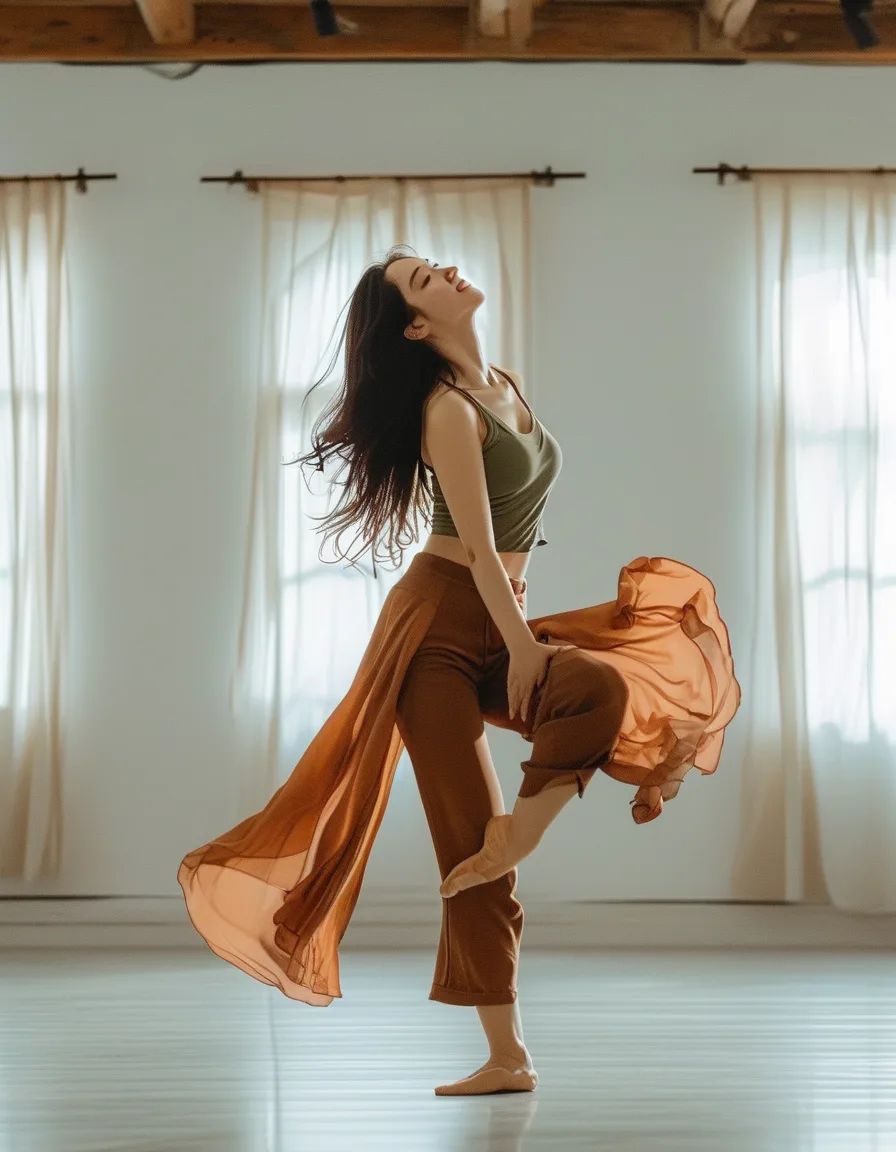
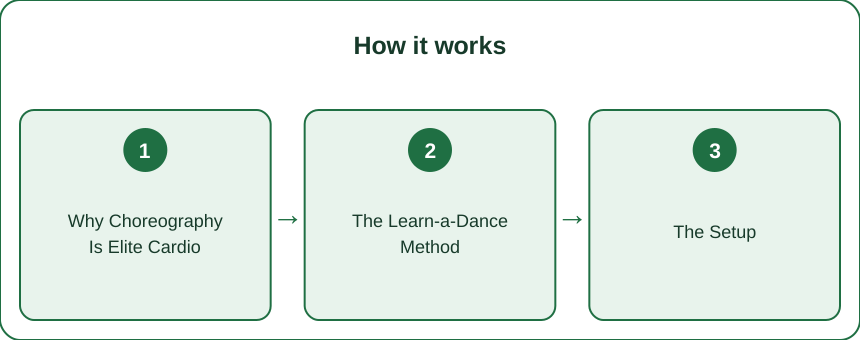
Do the maths. A full choreography run-through is 3 to 4 minutes of near-continuous full-body movement — sharp arm isolations, level changes, squats and drops, footwork, jumps — followed by a brief reset while you cue the next track.
That’s interval training with a different label. Five songs is 15–20 minutes of work with short recoveries, and most people’s heart rate tells the story clearly by song three.
The physical demands are broader than most cardio, too. K-pop choreography is built for camera, which means it’s full of sudden stops, direction changes, and low positions — the sport-science version of deceleration training, plus a lot of hip and shoulder mobility work you’d never do voluntarily.
Then there’s the part that makes it unusual: the cognitive load. Memorising and executing complex movement sequences is a genuinely different demand from repetitive exercise, and it’s the kind of activity that keeps appearing in the brain-and-movement research literature. Training memory, coordination, and cardiovascular fitness in the same 20 minutes is a rare combination.
How Do You Learn a K-Pop Dance?
A method that works, in order.
1. Start with the point dance
Don’t attempt the full 3-minute choreography. Learn the point dance — the signature 8-counts from the chorus that everyone recognises, the part that gets made into challenges.
It’s the most iconic section, the most tutorialised, and the most rewarding to finish. Full choreography is a project for after you’ve done a few of these.
2. Find a mirrored tutorial
The dance tutorial ecosystem on video platforms is enormous and entirely free. Search the song name plus “mirrored tutorial.”
“Mirrored” matters more than beginners realise. In a mirrored video, the instructor’s left is on your left, so you copy directly instead of mentally flipping every movement. Learning unmirrored roughly doubles the difficulty for no benefit.
3. Learn 8 counts at a time, at half speed
Set playback to 0.5x. Learn one 8-count until you can do it without watching. Then the next. Then chain those two together before adding a third.
Trying to absorb a whole chorus at full speed is the single most common reason people quit in week one.
4. Chain and accelerate
Once a section is reliable at half speed, go to 0.75x, then full speed. Speed comes from familiarity, not from effort — if you’re rushing to keep up, you’re not ready to accelerate yet.
5. One song a week
That’s a realistic beginner cadence, and the first time you run a whole song to full-speed music is a genuine rush. Work toward it.
What Setup Do You Need at Home?
Very little, but these four things matter.
Prop your phone at hip height and record yourself. This is by a wide margin the fastest improvement tool available — what a move feels like and what it looks like are two different things, and only one of them is on camera. Everybody hates the first video. Everybody improves after it.
Clear enough floor for a step in every direction. More than most people think; choreography travels.
Grippy socks or clean indoor trainers. Bare feet on hardwood is how ankles get rolled during a sharp pivot. Full socks slide too much.
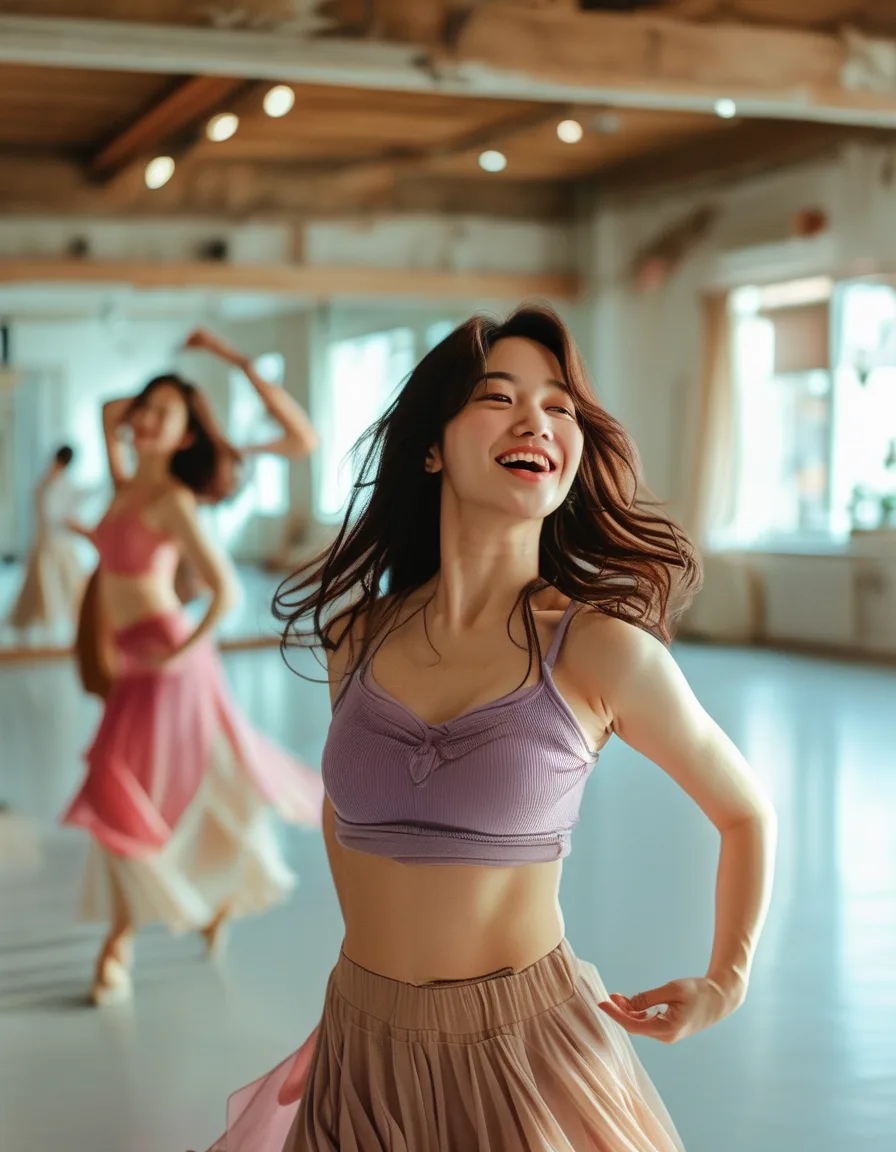
Clothes that move. Fitted-but-flexible is the target. The classic dancer uniform — an oversized tee over fitted high waist leggings — exists for a practical reason: you need the bottom half unrestricted for level changes and the top half loose enough for full shoulder range.
Class option: K-pop dance fitness classes are multiplying in most cities, and the group format adds accountability plus a teacher who can see what your camera can’t.
What Nobody Tells You About Dance Workouts
Your shoulders will hurt before your legs do. K-pop choreography lives in sharp arm isolations, and if you don’t normally lift your arms overhead repeatedly, they’ll notice.
Sharpness comes from stopping, not from moving. What makes choreography look “clean” is the hard stop at the end of each movement. Beginners move continuously through the shapes; the stop is the technique.
Warm up your wrists, ankles, and neck. These get moved into positions and speeds that daily life never asks for.
Progress is unusually visible. This month’s you dances what last month’s you couldn’t. Very few workouts show progress this concretely, which is a large part of why the habit sticks.
The content pipeline never ends. Every comeback ships new choreography, which means the training plan updates itself for free, forever. Practising to music you’d be playing anyway is temptation bundling working at full power.
If you have a knee, ankle, or back issue, scale the level changes and drops rather than skipping the song — most choreography can be done with smaller ranges of motion, and a physiotherapist can tell you which movements to modify.
FAQ
How many calories does a K-pop dance workout burn?
Roughly comparable to moderate-to-vigorous dance cardio — commonly cited in the range of 250–400 calories an hour depending on intensity and body size. Full-speed run-throughs sit much higher than learning sessions.
Do I need any dance experience to start?
No. The 8-count-at-half-speed method is designed for people with none, and the point dance format means your first win arrives within one session rather than one month.
How often should I practise?
Three to four sessions a week works well — enough repetition for the choreography to stick without your shoulders staging a protest. Learning sessions and full-speed run sessions count differently; alternate them.
TL;DR:
- A full choreography run is 3–4 minutes of interval-style cardio; five songs is a real session
- Trains memory and coordination alongside fitness — an unusual combination
- Start with the point dance, not the full song
- Use mirrored tutorials at 0.5x speed, 8 counts at a time
- Record yourself — it’s the fastest improvement tool there is
- Grippy socks, clear floor, clothes that let you move
- One song a week is a realistic beginner pace
Point dance first, mirrored and slow, record yourself, one song a week. The comeback schedule is your new training plan.
Keep Reading
This article is for general informational and styling purposes only. Fit, sizing, and product availability may vary.