Why Learning Choreography From a Mirrored Video Slows You Down
Quick Answer: Mirrored tutorials remove the mental step of reversing left and right, which speeds up the first learning pass and slows everything after it. You end up with choreography encoded in a mirror frame of reference, which breaks the moment you perform without a screen, dance beside someone, or film yourself unmirrored. Use mirrored video for the first learning pass only, then switch to the original within the first two sessions, and always review your own footage unmirrored.
The cost is not that mirroring is wrong. It is that most people never switch.
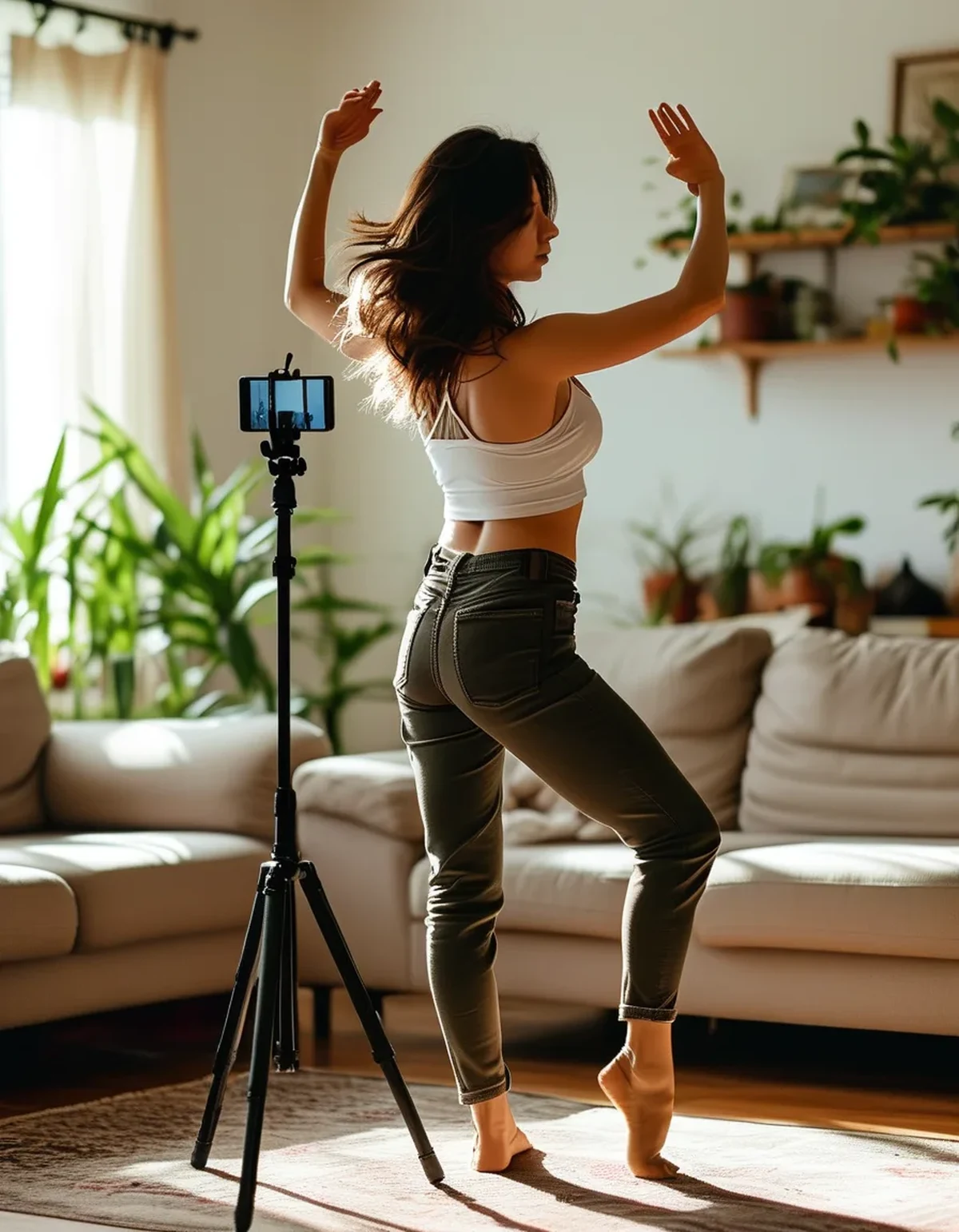
What does mirroring actually do to how you learn?
It changes which frame of reference the movement is stored in.
A mirrored video shows the dancer’s right hand on your right side, so you can copy directly without translating. That removes a genuine cognitive load, especially for complex sequences.
But you are learning a spatial map that is inverted relative to reality. In the original choreography, that arm is the left arm. You have learned the shape and stored it under the wrong label.
This is fine until the reference disappears. Performing without a screen, dancing beside someone doing the real version, learning a formation, or following a verbal cue - all of these require the true left and right, and a mirror-encoded routine produces a half-second hesitation while you translate.
Half a second is enormous in choreography. It is more than a beat at most K-pop tempos, and it is precisely where transitions look choppy.
The deeper issue is self-image. Practising exclusively in a mirror, mirrored, builds an internal model of the movement based on how it looks reflected. What an audience or a camera sees is the other version, and the gap between the two is why people are consistently surprised by their own footage.
When is mirrored video genuinely the right choice?
Three situations, all of them early.
The first learning pass. Getting the shape into your body quickly, before precision matters. Mirrored is measurably faster here and there is no reason to make the first hour harder than it needs to be.
Very fast or dense sections. Where the choreography changes every half beat, translating left and right in real time is genuinely impossible for most people. Learn it mirrored, then convert.
When you are completely new to dance. Beginners have enough to manage without adding spatial inversion. The switch can wait until the basic vocabulary is comfortable.
And when it is not: any point after the movement is roughly learned. The switch should happen within the first two sessions, and the longer it is delayed the more expensive it becomes, because you are unlearning as well as learning.
The tell that you left it too long: you can dance the routine perfectly facing the screen and it falls apart facing away. That is not a memory problem, it is a frame-of-reference problem, and it is fixed by practising the original version, not by more repetition of the mirrored one.
What Nobody Tells You About Practising With Video
Your phone camera mirrors the front-facing preview but usually saves the file unmirrored. So you practise watching a mirrored preview and then review footage that looks completely different - which is why your own videos are so consistently disorienting. Check your camera settings; most phones let you turn the mirroring off.
Practising only in a mirror creates a dependency. Dancers who always face a mirror lose accuracy immediately when it is removed, because the mirror was providing the feedback rather than their own proprioception. Practise facing away from the mirror for at least a third of every session.
Filming from the front is not enough. A side angle reveals depth, weight shift, and body angles that a front camera flattens completely. One side-angle recording per session finds problems that ten front recordings hide.
Slowing a video down changes the movement, not just the speed. Momentum-driven moves cannot be learned at 0.5x because the mechanism is different. Learn the sequence slow, but practise the feel at full speed.
Watching is not learning. There is a strong illusion of competence from watching a tutorial repeatedly. Marking through the movement - small, low-energy, but in the right order - encodes far more per minute than another watch-through.
And formations are always taught unmirrored. If you are learning a routine with a group, or planning to, mirror-encoded choreography and stage directions collide immediately. This is where the delayed switch costs the most.
How do you make the switch without losing the routine?
A four-step process across two or three sessions.
Step 1 - watch the original at full speed, twice, without moving. Just look. Notice which side each move actually starts on and name it out loud: left hand up, right foot cross. Naming is what converts a shape into a labelled movement.
Step 2 - mark through it slowly with the original video. Small movements, correct sides, no energy. Expect to feel clumsy for about ten minutes - that is the translation happening.
Step 3 - full speed with the original, facing away from any mirror. This is the honest test. If it breaks down, go back to step 2 rather than back to the mirrored version.
Step 4 - film yourself unmirrored and compare side by side. Play your footage next to the original at the same time. This is the single most efficient practice tool available and almost nobody does it, because it is uncomfortable.
Do this early in a routine’s life. Converting a routine you have practised for two weeks takes far longer than converting one you learned yesterday.
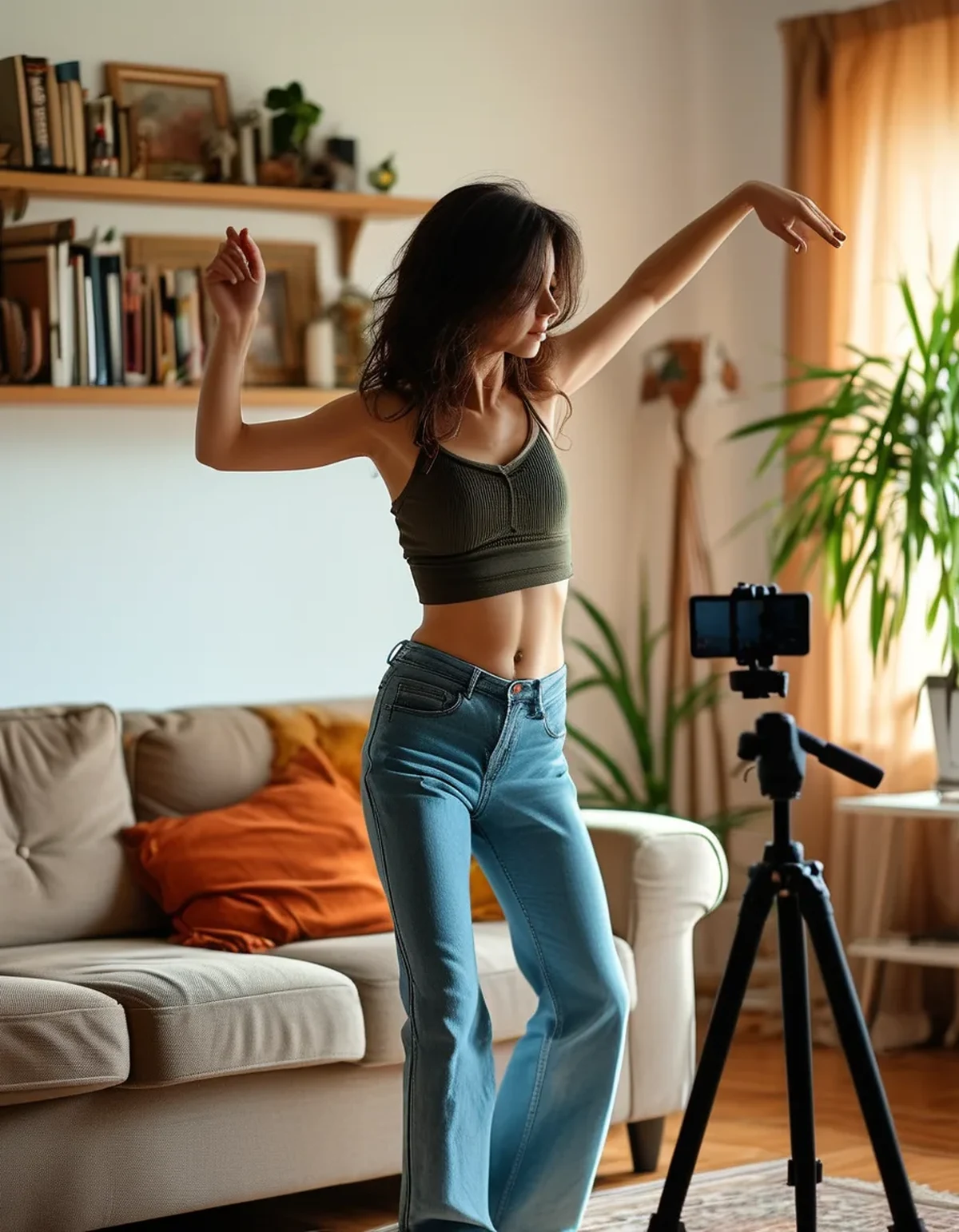
A practical setup note: consistent camera position and consistent clothing make comparison far easier. Fitted training clothes that show your body line clearly - as opposed to loose layers - make it genuinely possible to see whether an arm angle is correct, and that is what a practice video is for. Same spot, same height, same outfit, every session, and the week-to-week comparison becomes meaningful rather than noisy.
FAQ: Dance Practice Video Questions, Answered
Should beginners use mirrored tutorials?
Yes, for the first pass. Learn the shapes without the added load of reversing sides, then switch to the original within a session or two before the mirror version sets.
How do I stop my phone from mirroring my videos?
Most phones have a front-camera mirroring setting in the camera options. Turning it off means what you record matches what an audience sees, which makes review much more useful.
Why does the routine fall apart when I face away from the mirror?
Because the mirror was supplying the feedback rather than your own body awareness. Practise facing away for at least a third of every session and the dependency fades within a couple of weeks.
Is practising in slow motion useful?
For sequence and order, yes. For anything driven by momentum or weight transfer, no - those moves need full speed because the mechanism is different at half speed.
How often should I film myself?
Once per session is plenty, ideally including one side angle. Reviewing one recording carefully beats collecting five you never watch.
TL;DR:
- Mirrored tutorials speed up the first pass and slow everything afterwards, because the routine gets encoded in an inverted frame of reference.
- Switch to the original within the first two sessions - the longer you wait, the more you have to unlearn.
- Practise facing away from the mirror for a third of every session, and turn off front-camera mirroring so your footage matches what an audience sees.
- Film one side angle per session and compare side by side with the original - uncomfortable, and by far the most efficient tool available.
The short version is that mirroring is a learning aid, not a practice mode. Used for an hour it saves you time; used for a month it builds a version of the choreography that only works while you are looking at a screen.
Keep Reading
This article is for general informational and styling purposes only. Fit, sizing, and product availability may vary.