Why Learning From Mirrored Videos Slows You Down Later
Quick Answer: Mirrored tutorials let you copy the video like a mirror image, which is faster at first because you do not have to reverse anything mentally. The cost is that you learn the choreography as a visual copy rather than as left and right, so formations, partner work, and any non-mirrored reference become disorienting. Use mirrored video to learn the shape in the first session, then switch to the original to lock in actual sides before the movement becomes automatic.
Every dance tutorial channel offers a mirrored version, and there is a reason it is the more popular one. Following a mirrored video feels like following a person standing in front of you doing the moves the way you should.
It works. Right up until you stand in a formation with three other people and discover you learned the whole thing backwards.
What is actually different about learning mirrored?
You encode the movement as a spatial copy rather than as a left-and-right instruction.
When you follow a mirrored video, the instruction your brain stores is roughly move the same way as the shape in front of me. There is no left or right in that instruction, only matching.
When you follow an original-orientation video, you have to actively translate. Their left hand rising means my right hand rises. That translation is slower and effortful, and it produces a different, more durable representation: the move is a right-hand move.
Why the second one holds up better: the mirrored representation only works when there is something to mirror. Take the reference away, or replace it with a formation cue, and there is nothing to copy from.
This is also why mirrored learners often cannot verbalize their own choreography. Asked which foot steps first, they have to stand up and do it, because the information was never stored as a side.
When does the problem actually show up?
Later than you would like, which is what makes it a trap.
It does not show up when: practicing alone with the video, filming yourself against the mirrored version, or performing solo where nobody can tell which hand you used.
It shows up sharply when:
- Dancing in formation. Choreography positions are defined in real space. If your version is flipped, you travel the wrong direction and collide.
- Learning a part with a partner or a mirror-image pairing. The other person is working from real sides.
- Joining a class or a cover group where the teacher counts and calls sides out loud.
- Following the original music video for details, since it is not mirrored.
- Dancing without a mirror. This is the big one. Remove the visual reference and a mirrored-learned routine gets shaky, because the reference was load-bearing.
The cost of fixing it late: unlearning an automatic movement pattern takes substantially longer than learning it correctly the first time. Motor patterns consolidate with repetition and sleep, and after a couple of weeks of daily practice, a flipped routine is genuinely difficult to reverse.
So what is the right way to use mirrored video?
Use it for the first pass only, then switch. The sequencing is the whole answer.
Stage 1, learn the shape with mirrored video. Mirrored is genuinely better here. You are trying to understand what the move looks like and how the body parts relate, and removing the translation load lets you get there faster. Spend one session on this.
Stage 2, switch to the original orientation and name the sides out loud. Go through the same section saying right hand, left step, turn right. Slow, deliberate, verbal. This is where the durable representation gets built, and it takes far less time than stage 1 did.
Stage 3, practice without any video. Music only. This is the test that matters, because it removes the reference entirely.
Stage 4, film yourself and compare against the original, not the mirrored version. Your camera does not mirror, and neither does an audience.
A shortcut that helps a lot: most phone cameras mirror the front-facing preview by default while saving the file unmirrored. Turn off the mirrored front camera setting if your phone allows it, so what you see while filming matches what gets saved and what other people see.
The one-move test for whether you learned it properly: sitting still, say out loud which hand starts the chorus. If you have to stand up to find out, you learned it as a copy.
Myth vs Fact: Mirrored Practice Beliefs
Myth: Mirrored learning is just wrong and you should never use it. Fact: It is the faster route to understanding a movement’s shape, which is a real advantage in session one. The mistake is staying with it through consolidation.
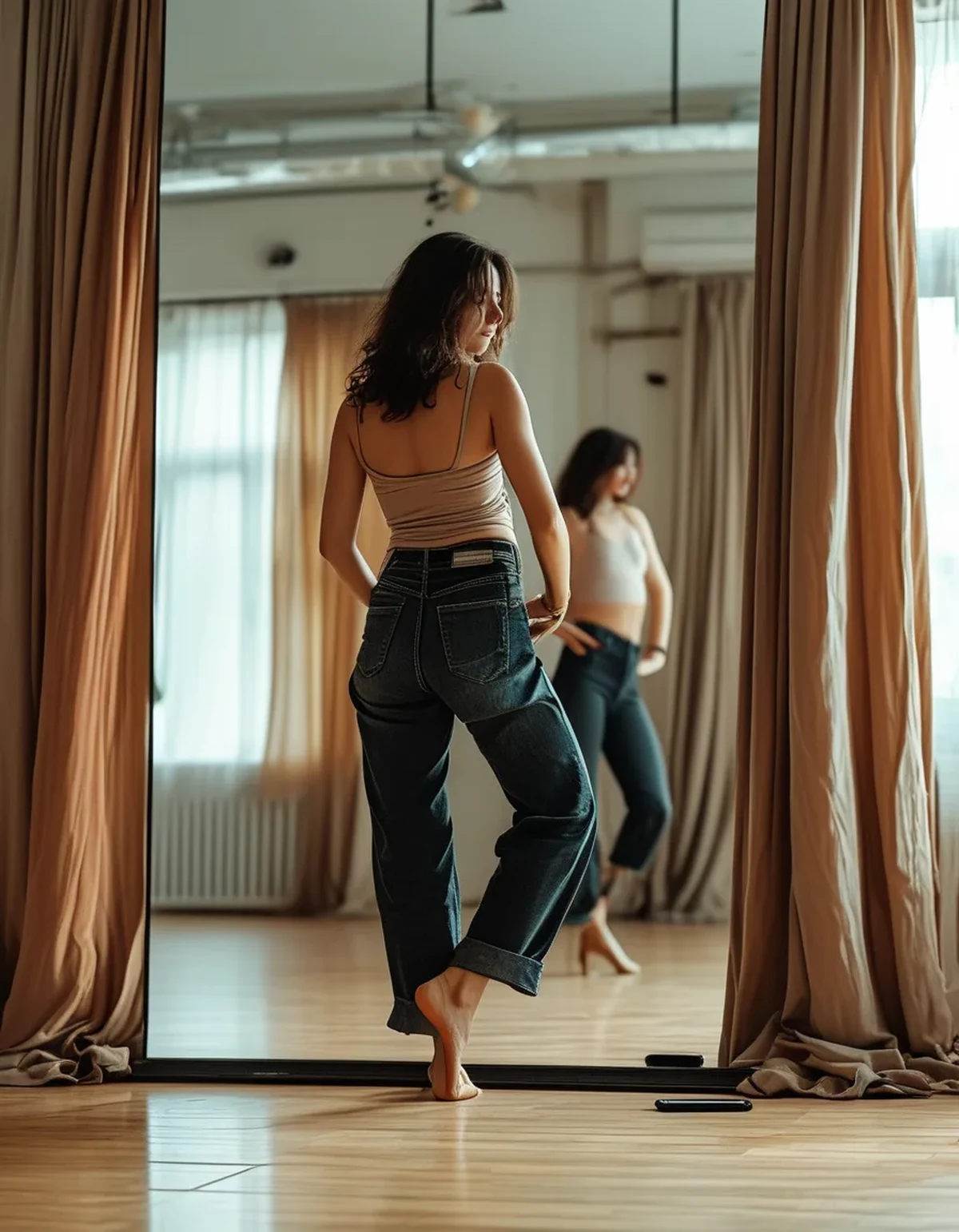
Myth: Practicing in front of a mirror has the same problem. Fact: Different issue. A studio mirror shows you unmirrored spatial reality reflected, so your right hand appears on the correct side relative to the room. The real mirror problem is dependence: heavy mirror practice builds a routine that relies on visual feedback, which is why performances feel different. Practice some reps facing away from the mirror.
Myth: If you can do the choreography well, orientation does not matter. Fact: It matters the moment you dance with anyone else or in any defined space. Formations are spatial, and a flipped dancer in a formation is a collision.
Myth: You can flip it later once you have it down. Fact: You can, and it takes longer than learning it correctly. Consolidated motor patterns resist reversal, and partially reversed patterns are worse than either version, since they produce hesitation at exactly the transitions.
Myth: Professional dancers learn mirrored too. Fact: They learn facing the choreographer, which is mirrored in the moment, and they are simultaneously being given verbal side cues, counted, and corrected. The verbal layer is what makes it work, and it is what a solo learner with a phone is missing.
Seasonal note: fall is when cover groups form and audition seasons run, which is exactly when solo-learned choreography meets other people for the first time. If you have been learning mirrored all summer, spend this week running your repertoire against the original orientation with the sides named out loud, before you are in a formation and finding out the hard way.
FAQ: Mirrored Choreography Questions, Answered
Are mirrored dance tutorials bad?
Not for the first session. They are the fastest way to see a movement’s shape. The problem is consolidating a routine as a visual copy, which breaks down in formations, with partners, and without a mirror.
How do I fix choreography I learned mirrored?
Run it slowly against the original orientation while saying the sides out loud, then practice with music and no video. Do this before the pattern is fully automatic, since reversal gets harder with repetition.
Should I practice facing the mirror or away from it?
Both. The mirror is useful for checking shape and it builds dependence on visual feedback. Include reps facing away, since that is the condition you will perform in.
TL;DR:
- Mirrored video teaches movement as a visual copy, not as left and right, so nothing is stored about actual sides.
- The cost appears in formations, partner work, mirror-free practice, and any original-orientation reference.
- Use mirrored for session one to learn the shape, then switch to the original and name the sides out loud.
- Test yourself sitting still: if you cannot say which hand starts the chorus, you learned it as a copy.
One extra session of translating sides now saves a genuinely unpleasant week of unlearning a flipped routine later.
Keep Reading
This article is for general informational and styling purposes only. Fit, sizing, and product availability may vary.