Why Practising in Socks Changes Your Choreography More Than You Think
Quick Answer: Practising in socks changes how much friction you have with the floor, and your body calibrates timing, weight shifts, and stopping distance to whatever friction it is trained on. Spins become far easier and sharp stops become impossible, so choreography learned in socks tends to look floaty and imprecise when performed in shoes. Practise in whatever you will perform in, and if you use socks for joint comfort, spend at least the last third of each session in shoes.
You nail the run-through in socks on your bedroom floor. You put trainers on for the recording and suddenly your turns are half-finished and your footwork sounds like someone falling down stairs.
What actually changes when you dance in socks?
Friction, and it affects more of the choreography than you would guess.
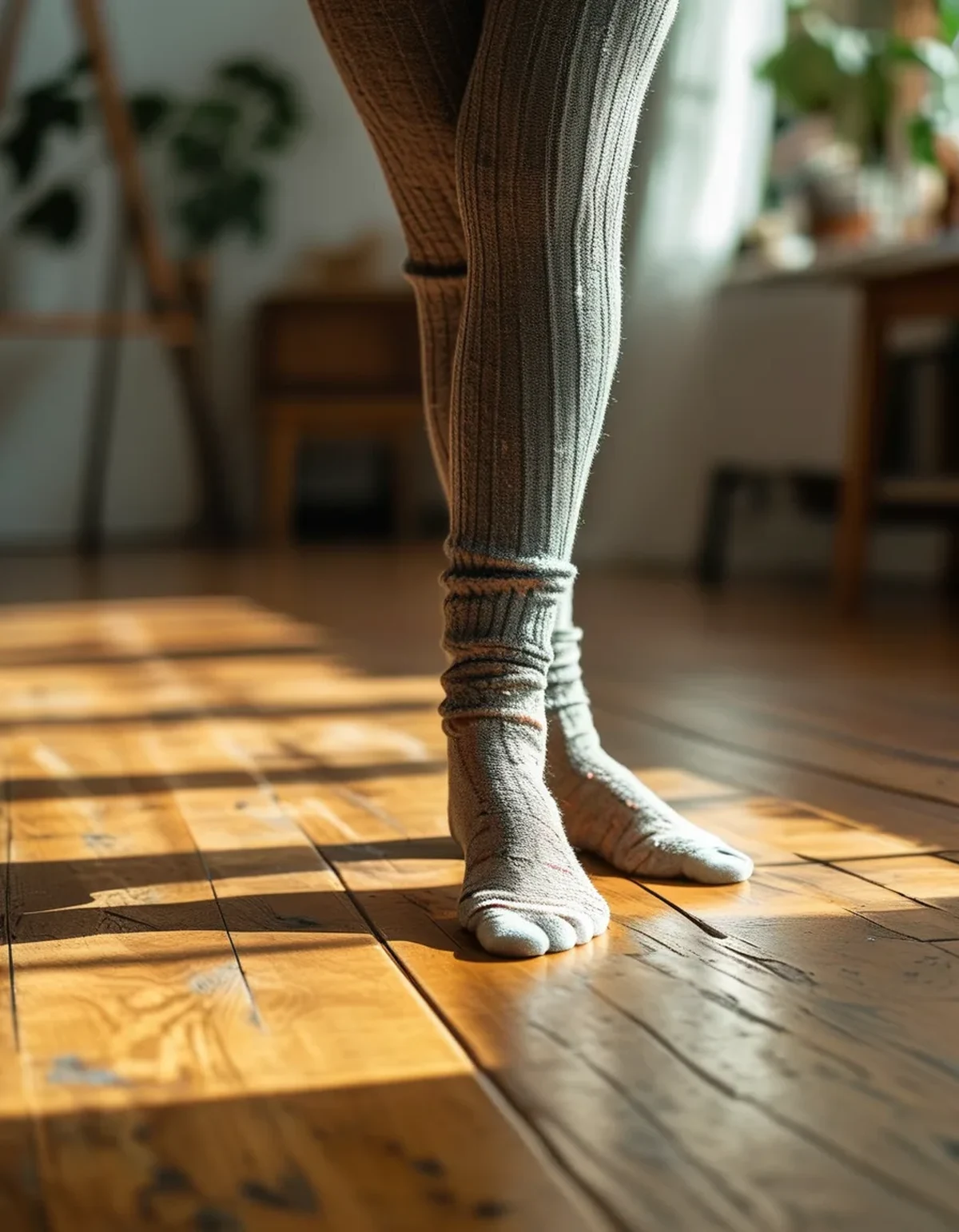
Socks on wood have very low friction. Your foot slides with minimal effort, which is why turns feel dramatically easier and why a slide that requires real technique in shoes happens accidentally in socks.
Stopping distance changes. Sharp stops - the hits that define most K-pop choreography - require your foot to grip and hold. In socks it keeps travelling a few centimetres, which softens every hit in the routine.
Weight shifts happen faster and less precisely. With low friction, moving weight from one foot to the other takes less muscular effort and lands less exactly. Your body learns a version of the move that requires less control than the real one.
Your ankles and feet work differently. Shoes provide lateral support that socks do not, so foot and ankle stabilisers work harder barefoot or in socks. That is genuinely useful strength work, and it is also a different movement pattern.
Turn technique adapts to the floor. A spin that works on a slick surface uses a different amount of push and a different spotting timing than the same spin on grippy studio floor. Muscle memory encodes the floor along with the move.
The core issue: your body does not learn choreography in the abstract. It learns choreography on a specific surface, at a specific friction, and changing that surface changes the performance.
Which moves suffer most in the switch?
The mismatch is not evenly distributed across a routine.
Sharp stops and hits suffer the most. These are the signature moments of most K-pop choreography, and they depend entirely on the foot gripping instantly. Practised in socks, the stop is always slightly late and slightly soft.
Turns become harder in shoes, not easier. People frequently assume the shoes will help. In practice, a turn learned in socks used too little push and the wrong timing, so the same effort in grippy trainers produces three-quarters of a rotation and a wobble.
Footwork sequences lose their cleanness. Fast directional changes rely on the ground pushing back. Learned on a slick floor, the push is undertrained, and in shoes the same steps feel heavy and land late.
Slides and glides are the reverse case. These are far easier in socks and genuinely difficult in shoes, so a routine that includes them can feel impossible after switching. They need specific practice in performance footwear.
Jumps and landings change too. Landing in socks provides no cushioning and no lateral support, which changes both how you land and how much you are willing to commit to the jump.
Floor work is the one thing socks improve legitimately. Knee slides and floor transitions are easier and less painful without shoe soles catching, and there is nothing wrong with rehearsing those separately in socks.
What Nobody Tells You About Practice Surfaces
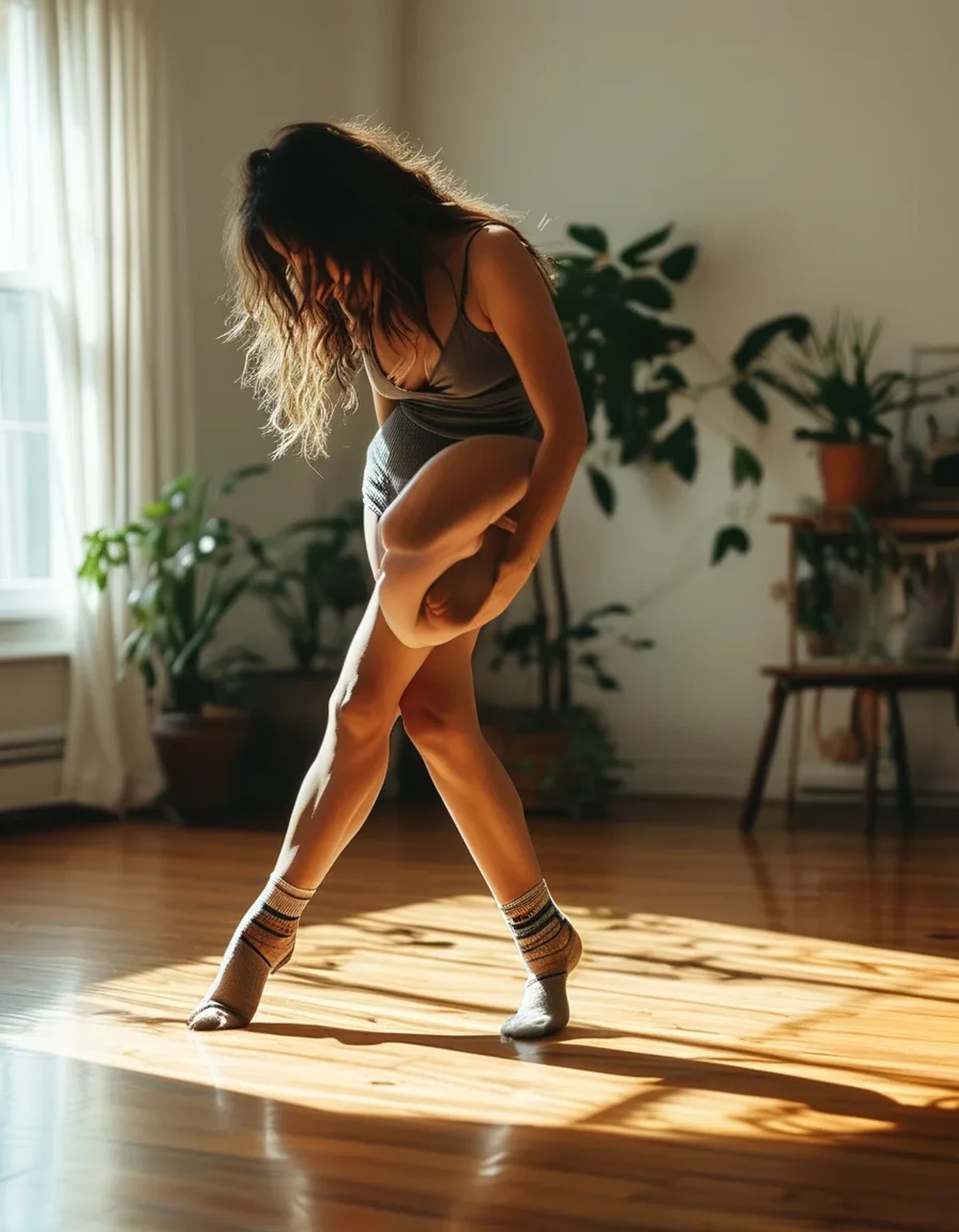
Your bedroom floor is probably slicker than any studio. Domestic laminate and polished wood have far less grip than the sprung, matte floors most dance studios install. The gap between your practice surface and a performance surface is usually larger than the gap between socks and shoes.
Carpet is the worst practice surface, and it is what most people have. It grips unpredictably, catches on turns, and is the leading cause of rolled ankles in home practice. If your only option is carpet, a cheap 1 by 1 metre dance mat or even a large offcut of vinyl flooring transforms it.
The shoes matter as much as the surface. Chunky trainers with soft foam soles absorb the sharpness out of footwork. Most K-pop performance footwork is cleaner in a flatter, firmer sole, which is why so many dancers perform in relatively thin trainers rather than running shoes.
Brand-new trainers are almost too grippy. Fresh rubber on a clean floor can catch and stop a turn dead. Many dancers deliberately scuff new shoes on concrete before performing in them.
Filming reveals the mismatch instantly. Record the same eight-count in socks and in shoes back to back. The difference in stopping sharpness is far more visible on camera than it is in the mirror, and it is the fastest way to convince yourself this matters.
Sock practice has real value for one thing. It builds foot and ankle strength that shoes take over, and dancers who never train without shoes tend to have weaker intrinsic foot muscles. Use it deliberately as strength work rather than as the default.
And the floor you perform on will be different again. Stage, gym floor, tiled hallway for a video - each has its own friction. Ten minutes of adjusting to the actual surface before performing is not optional.
A practical practice setup
You do not need a studio. You need consistency and a small amount of planning.
Decide what you are performing in, and default to it. If the video is being filmed in trainers, most practice should be in trainers. This is the single most useful change.
Split the session by purpose. Learning phase in whatever is comfortable, run-throughs in performance shoes. A reasonable structure is the first two-thirds learning, the last third in shoes at full commitment.
Keep a dedicated pair of indoor dance shoes. Never worn outside, so the soles stay clean and the friction stays predictable. Dust and grit on a sole changes grip more than people realise.
Get a piece of vinyl flooring if you practise on carpet. A 2 by 2 metre offcut costs very little and is the highest-value purchase available for home practice. It also protects the floor from marks.
Warm up your ankles properly when practising in socks. Without shoe support, ankle stabilisers take more load, and rolled ankles on slick floors are the most common home practice injury.
Test each new routine on the actual performance surface at least twice. Not once. The first time you are adjusting; the second time you are learning it.
And do not chase clean footwork in socks. If a sequence sounds and looks clean in socks, that tells you very little. Judge it in shoes on a grippy surface, where the errors show.
This is general information, not medical advice. Persistent ankle or knee pain during dance practice deserves a professional assessment.
FAQ: Dance Practice Footwear Questions, Answered
Should I practise K-pop choreography in socks or shoes?
Mostly in whatever you will perform in. Socks have far less friction, which makes turns easier and sharp stops impossible, so choreography learned in socks tends to look soft when performed in shoes.
Why are my turns worse in shoes than in socks?
Because a turn learned on a slick surface uses less push and different timing. With the grip of a shoe on a studio floor, that same effort produces an incomplete rotation. The turn has to be relearned at the new friction.
Is practising in socks bad for my ankles?
Not inherently - it strengthens the foot and ankle stabilisers that shoes normally support. The risk is slipping on very slick floors, so warm up the ankles and avoid fast directional work on polished surfaces.
What shoes are best for K-pop dance practice?
Flat, firm, relatively thin soles that let you feel the floor, kept as indoor-only so the grip stays consistent. Thick foam running shoes absorb the sharpness out of footwork.
How do I practise if I only have carpet?
A vinyl flooring offcut, roughly 2 by 2 metres, is the cheapest effective fix. Carpet grips unpredictably and is the most common cause of rolled ankles in home practice.
TL;DR:
- Socks drastically reduce friction, which makes turns easy and sharp stops impossible.
- Your body encodes the floor along with the choreography, so switching surfaces changes the performance.
- Sharp hits suffer most; slides are the one thing socks make artificially easy.
- Practise mostly in performance shoes, kept indoor-only so the grip stays predictable.
- On carpet, a vinyl offcut is the single best purchase you can make.
The routine that looks perfect on your bedroom laminate is a routine you learned on your bedroom laminate. The floor is part of the choreography.
Keep Reading
This article is for general informational and styling purposes only. Fit, sizing, and product availability may vary.