Why Your Arms Look Stiff Even When Your Footwork Is Perfect
Quick Answer: Stiff-looking arms in K-pop choreography usually come from moving only from the shoulder joint instead of initiating movement from the chest or core, holding tension in the hands and fingers, and hitting positions too sharply without any follow-through — relaxing the wrists and initiating from the torso fixes most of it.
A dancer can nail every step and still look robotic if the arms move like they’re disconnected from the rest of the body — which is exactly what happens when arm movement starts and ends at the shoulder alone.
Why does moving ‘from the shoulder’ make arms look stiff?
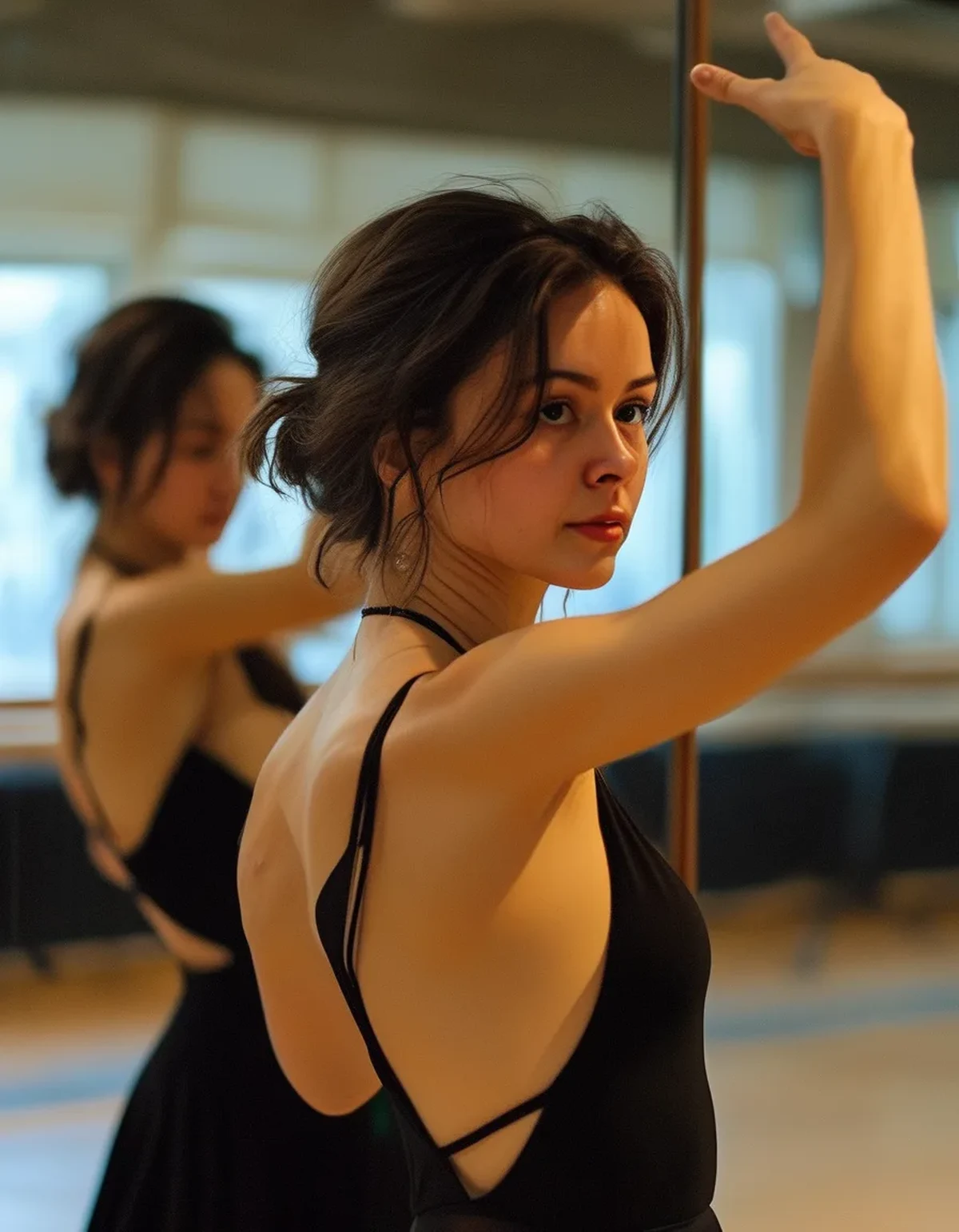
Isolating arm movement to just the shoulder joint, without any involvement from the chest, back, or core, creates a mechanical, puppet-like quality because real fluid movement in professional choreography actually originates from the torso and travels outward through the arm. Practicing initiating arm movements by first engaging the chest or upper back, letting the arm follow, immediately looks more connected and less isolated.
What role do hands and fingers play in a movement looking stiff or fluid?
Tense, rigid fingers — held stiffly straight or clenched — read as stiffness even when the arm itself is moving correctly, since hands are often the last thing an audience’s eye settles on in a shot. Consciously softening the hands, allowing slight, natural finger curve rather than locked straightness, makes the same exact arm movement read as noticeably more fluid.
Why do sharp ‘hit’ movements sometimes look robotic instead of powerful?
Hitting a pose or accent point with zero follow-through — stopping completely dead with no residual movement or breath in the position — can look mechanical rather than sharp and powerful, even though sharpness is often the goal. Professional dancers typically add a tiny amount of controlled follow-through or settle into the position rather than freezing it instantly, which preserves sharpness while avoiding the robotic quality.
Does watching yourself only in mirrored video training videos affect this?
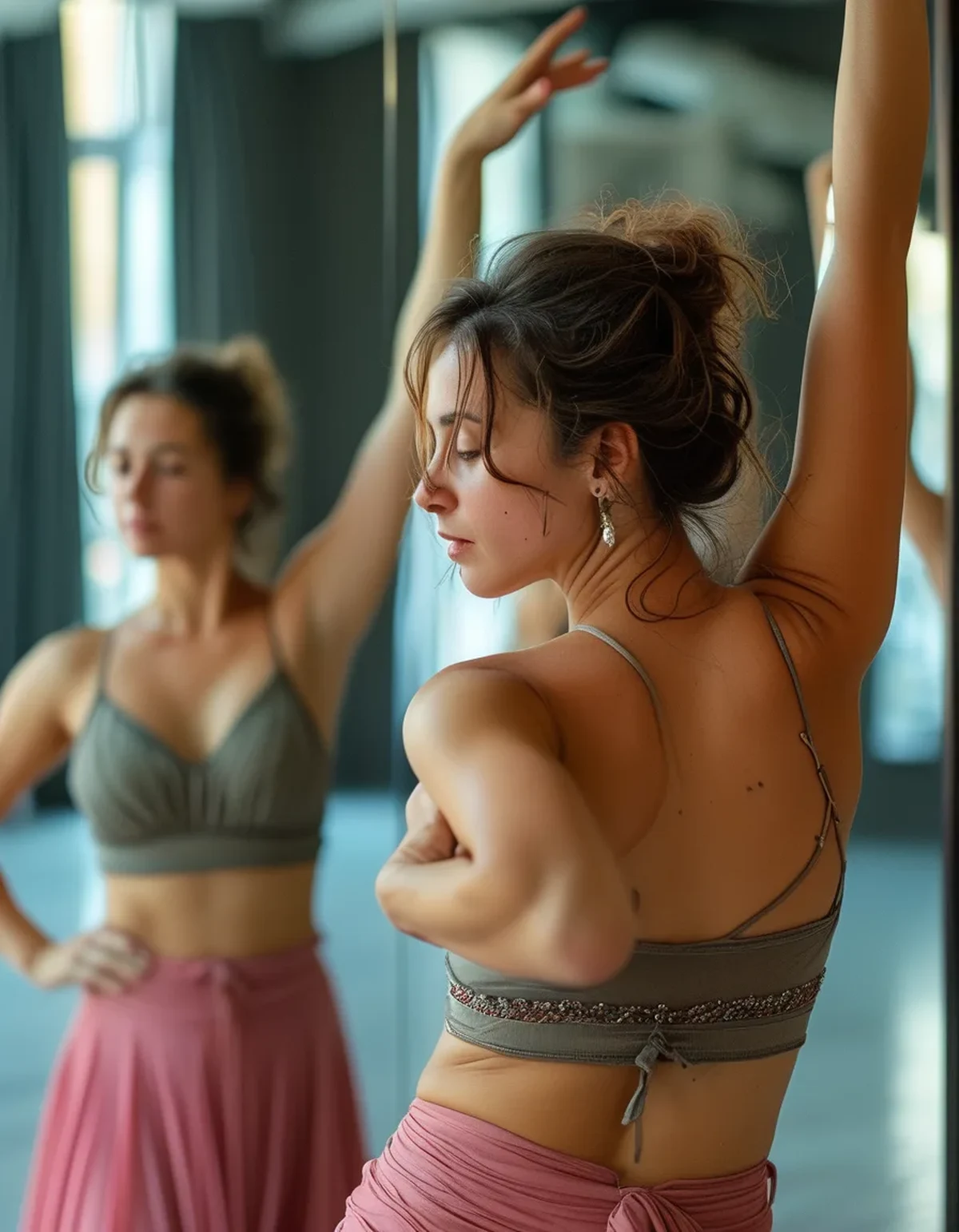
Yes, indirectly — dancers who exclusively practice to mirrored training videos sometimes develop stiffer movement because they’re focused on matching exact positions frame by frame rather than internalizing the flow and musicality between positions. Practicing the transitions between key positions, not just the positions themselves, develops the fluidity that position-matching alone misses.
How much does breathing affect whether movement looks stiff or natural?
Holding your breath during difficult sections — common when concentrating hard on getting steps right — creates visible tension throughout the body, including the arms, even if the choreography itself is executed correctly. Consciously breathing through combinations, especially technically demanding sections, reduces full-body tension that otherwise shows up as stiffness in the arms and shoulders specifically.
What Nobody Tells You About Fixing Stiff Arm Movement
Most dancers try to fix stiffness by focusing harder on the arms themselves, when the actual fix often comes from relaxing unrelated areas — jaw, shoulders creeping up toward the ears, and breath — that create tension patterns the arms inherit. Filming yourself from the side, not just facing the mirror, often reveals shoulder tension creeping up that’s invisible from the front but is a major hidden driver of stiff-looking arms.
FAQ: Fixing Stiff Arms in Dance Questions, Answered
How long does it typically take to notice more fluid arm movement?
Most dancers see a clear improvement within 2-3 weeks of deliberately practicing torso-initiated movement and relaxed hands.
Does stretching help with arm fluidity, or is it purely a technique issue?
Stretching the shoulders and upper back can help remove physical tightness that contributes to stiffness, but it’s a supporting factor rather than the main fix.
Is stiffness more common in beginners, or does it affect experienced dancers too?
It affects both — experienced dancers can develop stiff habits under performance pressure or when overly focused on technical accuracy over feel.
TL;DR:
- Arm stiffness usually comes from isolating movement to the shoulder instead of the torso
- Tense, rigid fingers read as stiffness even when the arm itself moves well
- A tiny bit of follow-through on sharp hits looks more powerful than a dead stop
- Relaxing the jaw, shoulders, and breath often fixes arm stiffness more than focusing on the arms directly
Fluid arms come from relaxing the whole body’s tension patterns, not from trying harder on the arms in isolation.
Keep Reading
This article is for general informational and styling purposes only. Fit, sizing, and product availability may vary.