Why Your K-pop Dance Formation Spacing Keeps Drifting
Quick Answer: Formation spacing usually drifts because dancers rely on watching each other instead of fixed floor references, so small errors compound across a routine. Using taped floor marks and practicing formation transitions in isolation, without the full choreography, fixes most drift within a few sessions.
Everyone starts in the right spot, and by the second formation change the whole group has quietly drifted a foot to the left — a familiar and very fixable problem.

Why does spacing drift even when everyone knows the formation?
Dancers commonly orient off a nearby person rather than a fixed point, so if one dancer is slightly off, everyone referencing them drifts too — small errors compound across the group rather than staying isolated to one person.
What’s the single most effective fix for this?
Taping specific floor marks for each formation and practicing the transitions in isolation — without music or full choreography — trains dancers to find fixed spots independently rather than relying on peripheral vision of neighbors.
Does mirror practice actually help or hurt formation spacing?
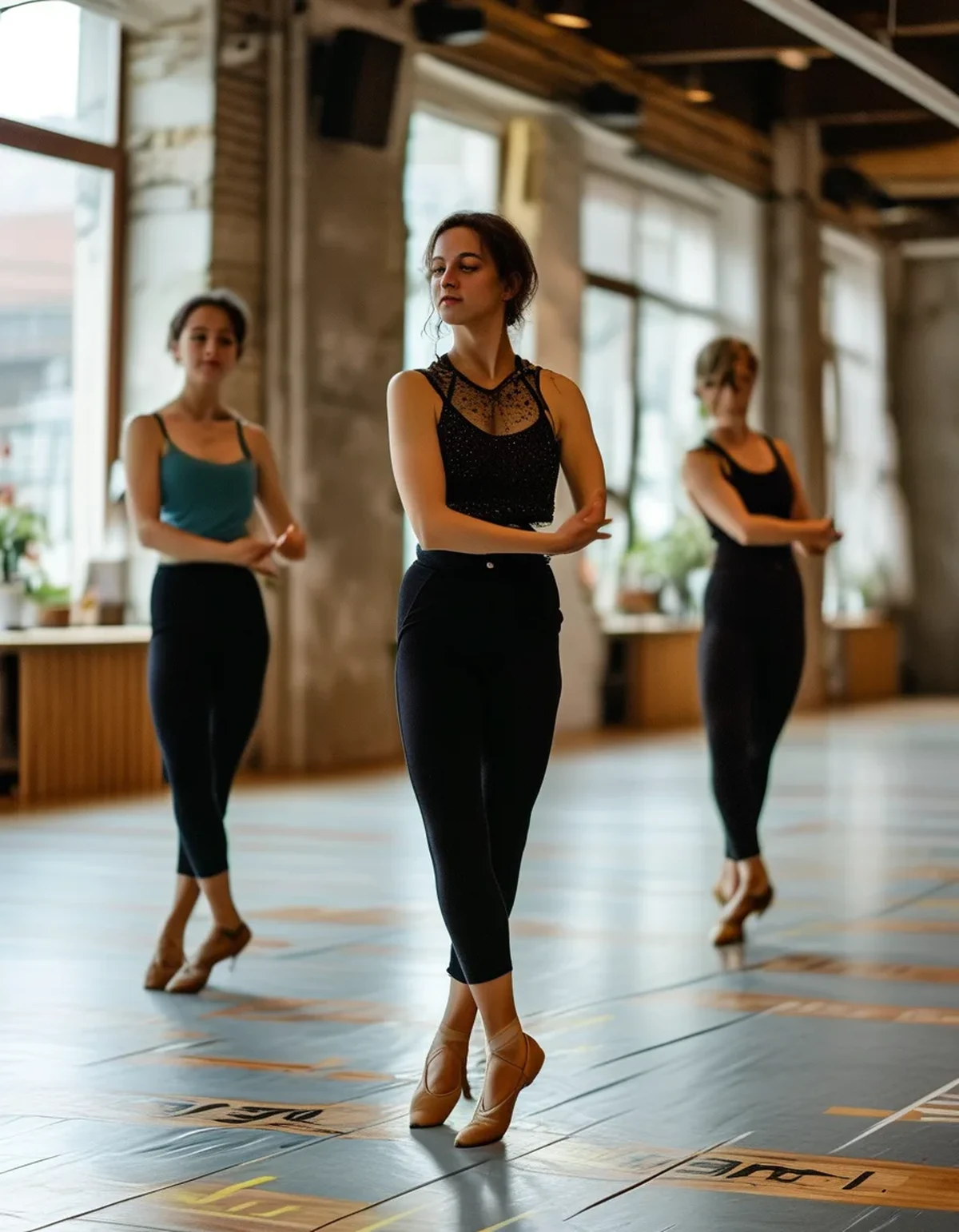
Mirror practice helps with individual technique but can slightly hurt spacing awareness, since dancers get used to a flipped, single-perspective view that doesn’t match how spacing looks from the audience or camera angle during a real performance.
How much does formation drift actually matter for smaller changes?
Even a few inches of drift becomes visually obvious in wide symmetrical formations or camera shots that emphasize spacing, so what feels like a minor personal adjustment can read as a noticeably uneven formation on video.
What Nobody Tells You About Formation Practice
Most groups over-rehearse the dance moves themselves and under-rehearse the formation transitions specifically — running transitions alone, slowly, and repeatedly, closes spacing gaps faster than running the full song at speed over and over.
FAQ: Dance Formation Spacing Questions, Answered
How long should dedicated formation drilling take per practice?
Even 10-15 minutes of isolated transition drilling per session, separate from full run-throughs, measurably improves spacing consistency within two to three weeks.
Does formation spacing matter more for beginners or advanced groups?
It matters at every level, but beginners tend to drift more since attention is still split between remembering choreography and tracking spacing simultaneously.
Can video review help fix spacing issues?
Yes — filming from the audience-facing angle and reviewing specific formation moments makes drift visible in a way that feels different from how it feels while dancing.
TL;DR:
- Spacing drift compounds because dancers reference each other, not fixed points
- Taped floor marks and isolated transition drills fix drift more directly than full run-throughs
- Mirror practice helps technique but can mildly hurt spacing awareness
- Filming from the audience angle reveals drift that’s hard to feel while dancing
Formation spacing is a specific, drillable skill separate from the choreography itself, and it responds quickly to focused practice.
Keep Reading
This article is for general informational and styling purposes only. Fit, sizing, and product availability may vary.