Why Your Timing Looks Perfectly On-Beat Filming Yourself but Off in the Mirror
Quick Answer: Mirrors introduce a small but real visual processing delay because your brain has to flip the image left-right in real time while also tracking movement against the music, which adds cognitive load that isn’t present when simply moving to a beat without a mirror. This can make timing feel subjectively ‘off’ even when a recording shows you’re actually on beat.
You feel like you’re lagging behind the music every time you practice in the mirror, but your own recorded video shows you right on time. That mismatch isn’t your imagination — mirrors add a genuine layer of processing your brain has to work through.
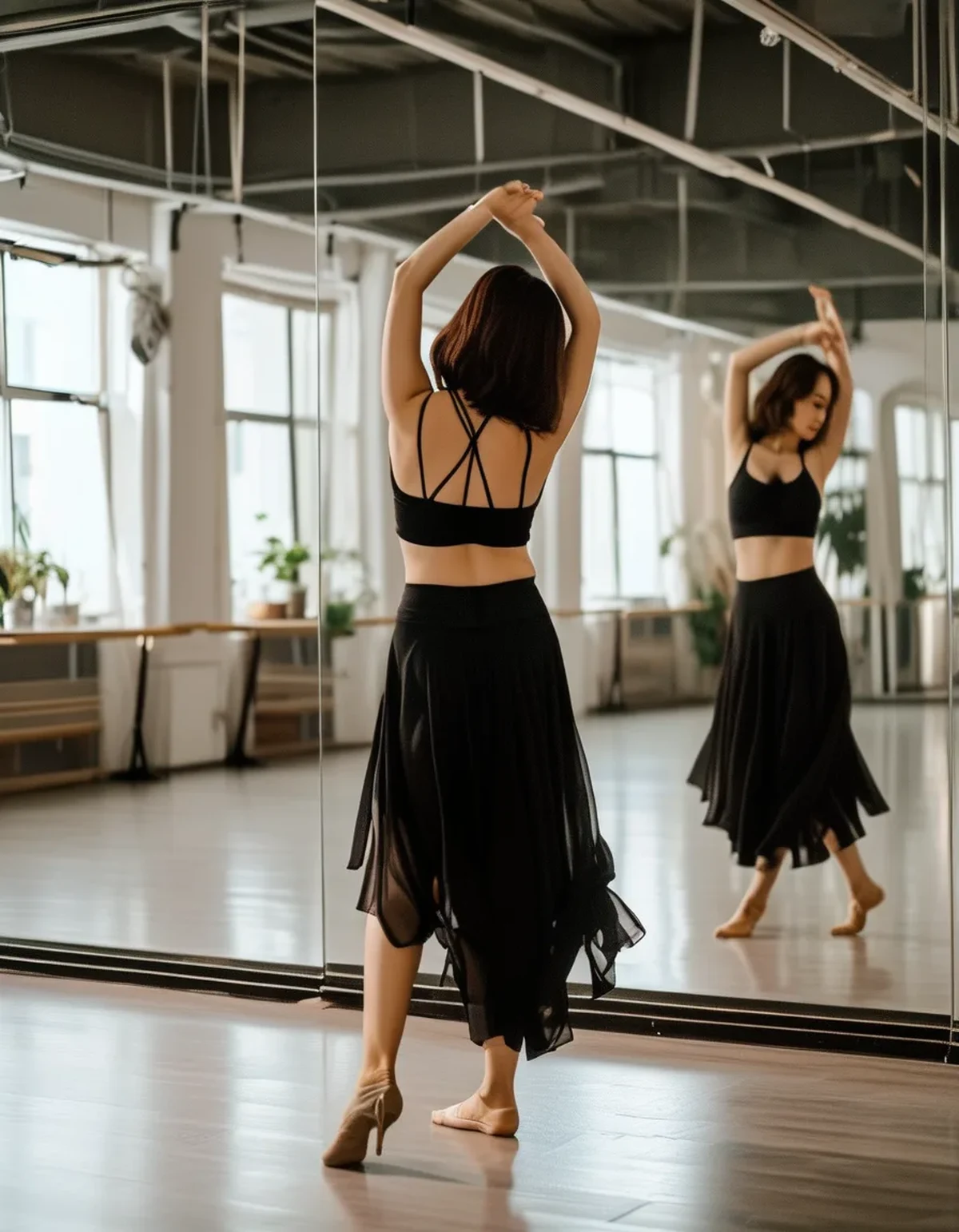
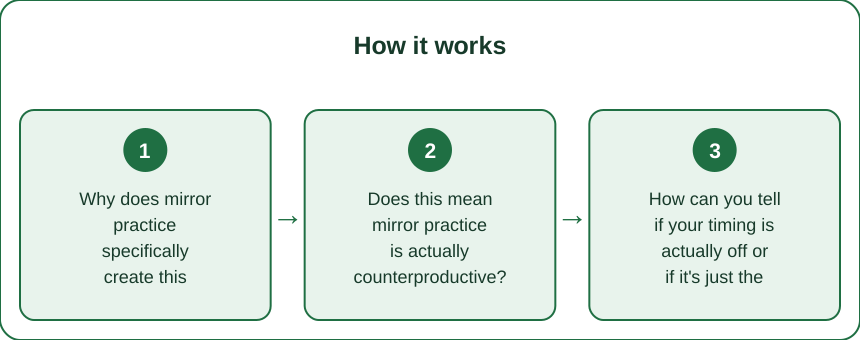
Why does mirror practice specifically create this perception gap?
Watching yourself in a mirror requires your brain to process a left-right flipped version of your own movement in real time, which adds a small but measurable cognitive processing delay compared to moving without a visual self-reference. This delay can translate into a subjective feeling of lagging, even when your actual movement timing hasn’t changed.
This is a known phenomenon in motor learning research around mirrored visual feedback, not something specific to dance or a sign of poor rhythm.
Does this mean mirror practice is actually counterproductive?
No — mirrors are still valuable for checking form, spacing, and technique, which is a different function than timing practice. The issue is only when you use the mirror as your primary timing reference; for pure timing and rhythm work, practicing without the mirror (or reviewing recorded video afterward) gives a more accurate read.
Most dancers benefit from splitting practice: mirror-focused sessions for form and spacing, non-mirror or recorded sessions for timing and musicality.
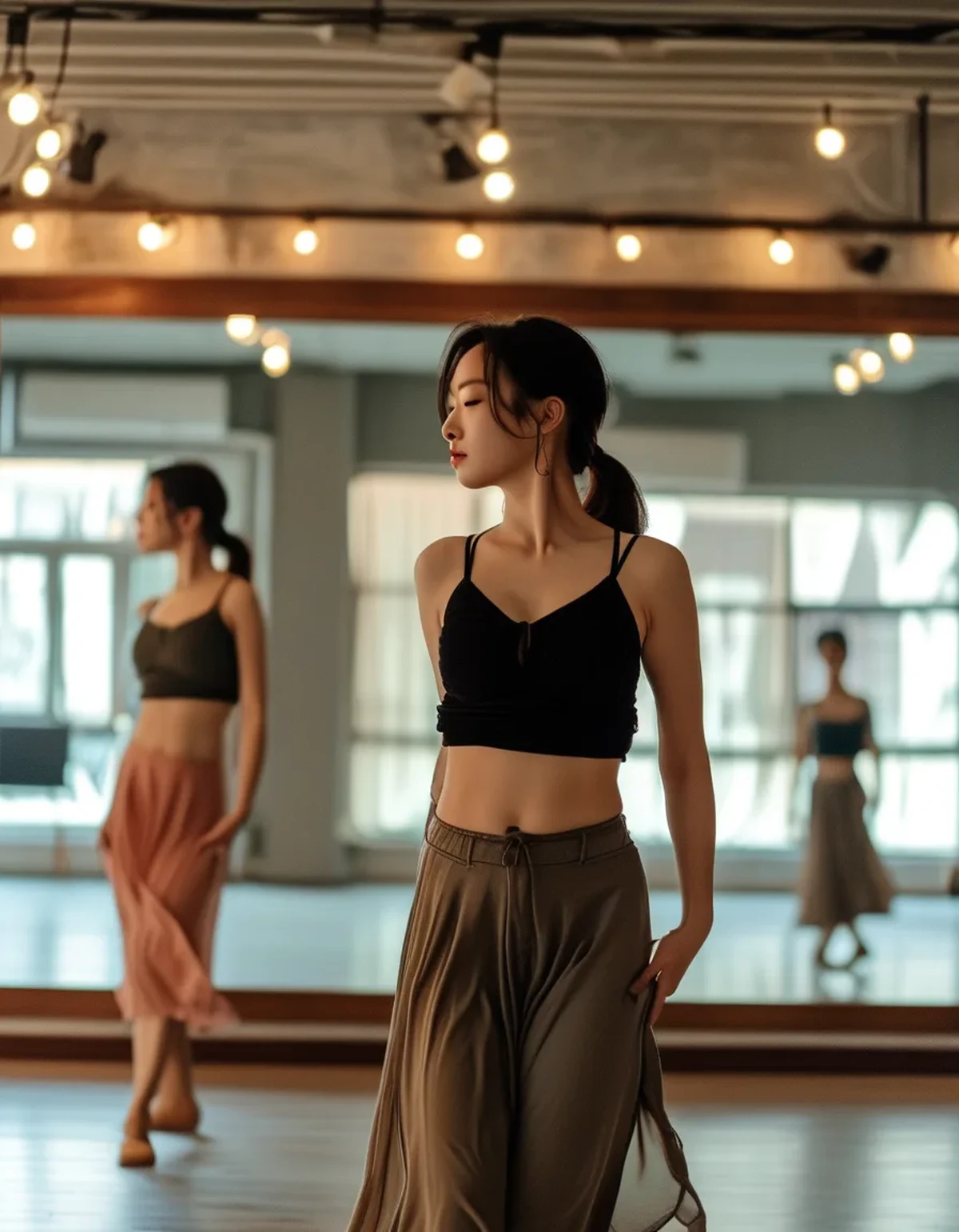
How can you tell if your timing is actually off or if it’s just the mirror effect?
Record yourself and review the footage without the flipped, real-time mirror element — this removes the added processing delay and shows your actual timing against the music. If the recording looks on-beat but the mirror feels off in the moment, that’s a strong sign it’s the perception gap, not a real timing issue.
Comparing your recorded timing to a reference video of the choreography frame-by-frame is the most reliable way to confirm genuine timing accuracy.
Myth vs Fact: Mirror Practice and Timing
Myth: If it feels off in the mirror, your timing is actually off. Fact: Mirrors add real-time visual processing load that can create a subjective lag feeling even when recorded footage shows correct timing.
Myth: You should always practice choreography facing a mirror. Fact: Mirrors are best for form and spacing checks; timing and musicality practice benefits from working without one, or reviewing recordings afterward.
FAQ: Kpop Dance Timing and Mirrors, Answered
Should beginners avoid mirrors altogether?
No — mirrors are still useful early on for learning spacing and correcting obvious form errors, just don’t rely on them as your only timing check.
Does this perception gap get smaller with more mirror practice experience?
Some dancers report it lessening somewhat with experience, but it doesn’t fully disappear since it’s tied to the real-time flip-processing itself, not skill level.
Is it better to learn new choreography with or without a mirror first?
Many dancers find learning the raw movement and counts without a mirror first, then adding mirror practice for spacing refinement, produces more accurate timing overall.
TL;DR:
- Mirrors add real-time left-right flip processing that creates a subjective timing lag
- This doesn’t mean your actual timing is off — recorded footage is the more accurate check
- Use mirrors for form and spacing, and separate non-mirror practice for timing and musicality
- The perception gap is a known processing effect, not a sign of poor rhythm
If the mirror keeps telling you you’re behind the beat but your recordings say otherwise, trust the recording — the mirror is adding a layer of noise your rhythm doesn’t actually have.
Keep Reading
This article is for general informational and styling purposes only. Fit, sizing, and product availability may vary.